

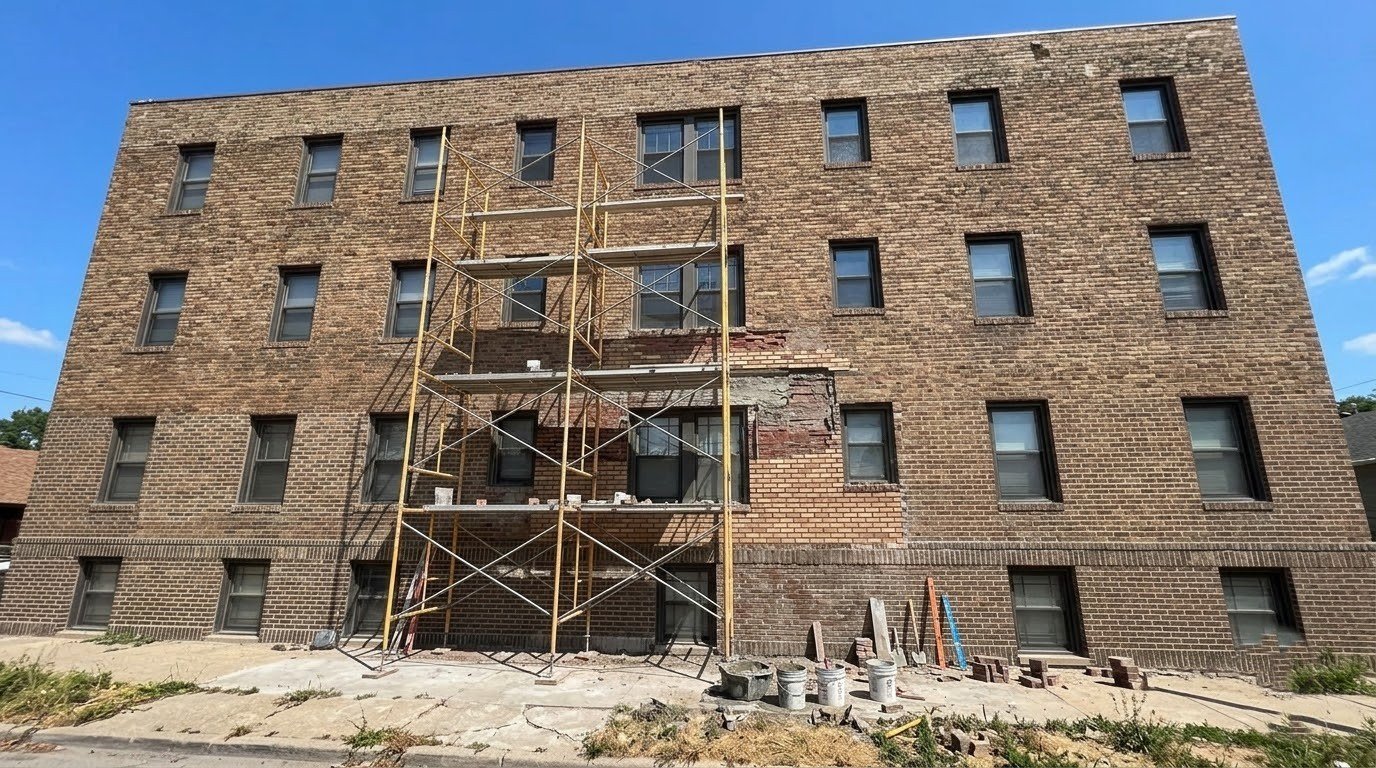
Brick Repair in Plymouth
10 Years
Workmanship warranty, in writing

A faucet, a dryer vent, or a gas line that runs through a brick front sits in a hole cut in that brick, and the handful of units around the hole can take more water, warm air, and knocks than any others on the wall. That ring of brick may crack or flake while the wall beside it stays sound.
Replacing the ring is brick repair at its smallest: the damaged units are cut free, and new ones chosen to suit the wall are laid back around the pipe or duct. A Plymouth front built after 1970 can carry several of these fixtures. When one has to come off for the work, its own trade removes and refits it; that part is never ours.
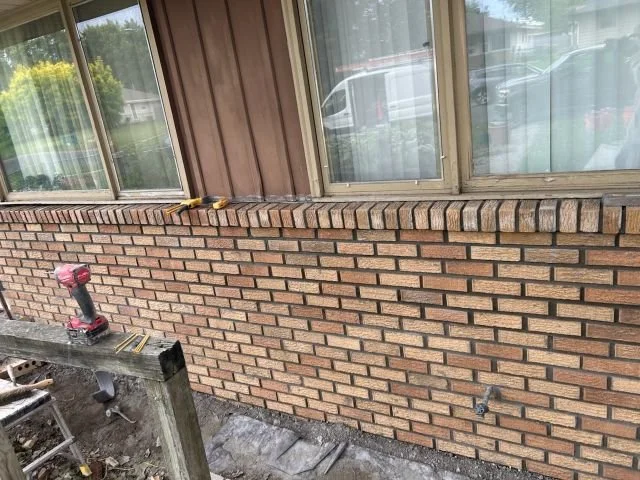
Hose Bibs and Vents Through Plymouth Brick
Plymouth's builders were busiest from 1970 on. On recent houses, brick is a decorative face rather than part of the structure, as our Plymouth page notes, so trouble in it tends to stay where it starts. Damage around a fixture is trouble of that kind.
A house of that era can have its brick crossed by a good many services: an outside faucet on the front or the garage side, a dryer vent, a bath or kitchen fan, the gas pipe running from the meter into the house, and the refrigerant lines for an air conditioner. Some went in when the house was built. Others came later, as furnaces, air conditioners and dryers were replaced, and a new appliance can call for a new or wider hole to be drilled through the brick laid around the old one.
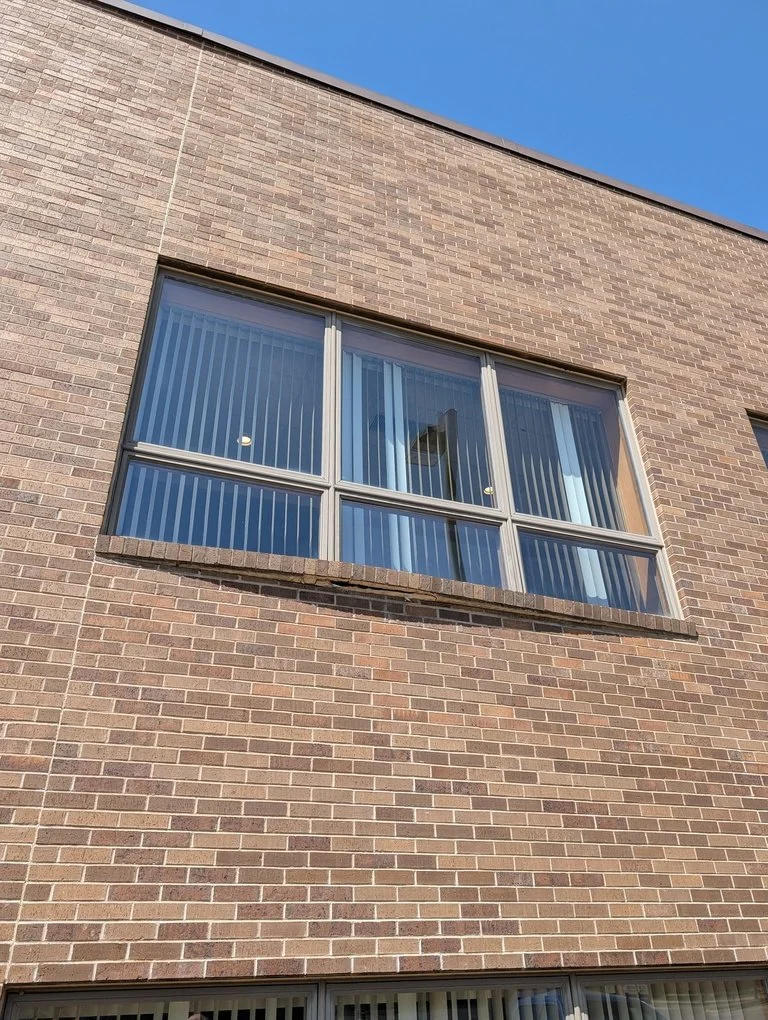
Fixtures Set Into Brick
Brick around a fixture gives way for a handful of reasons, and each leaves its own mark.
An outside faucet, the hose bib, is the wettest of them. A slow drip or a leak at the valve feeds water to the same few units every time it runs. Cracking, crazing, and spalling are among the results the Brick Industry Association lists in its technical note on water penetration for brickwork that takes on more than its share of water and then freezes and thaws repeatedly.
A dryer or fan vent works the other way. It pushes warm, damp air out against cold brick, and some of that moisture can settle into the units around the hood and freeze there. The flaking then tends to circle the hood's edges.
Then there is the hole itself. A hole cored or broken through brick can crack the units at its edges, and the brackets and straps that hold a meter pipe or a line set to the wall may be fastened into the brick with anchors that split a unit when they sit too close to its edge.
Last is the seal where the fixture meets the brick. Once that bead cracks or pulls away, rain running down the wall finds the gap and soaks the units around the opening from inside the hole.
Whatever the cause, the fix at the wall does not change: the damaged ring is removed, and each replacement is shaped as needed to fit around the pipe or duct before it is laid on fresh mortar. A faucet that still drips will treat the new brick the way it treated the old.
The bead of sealant at a fixture's edge belongs with the fixture, and the trade that sets the fixture renews it. Caulk between bricks, standing in for mortar, is another matter, and our brick repair page explains why we keep it out of a wall.
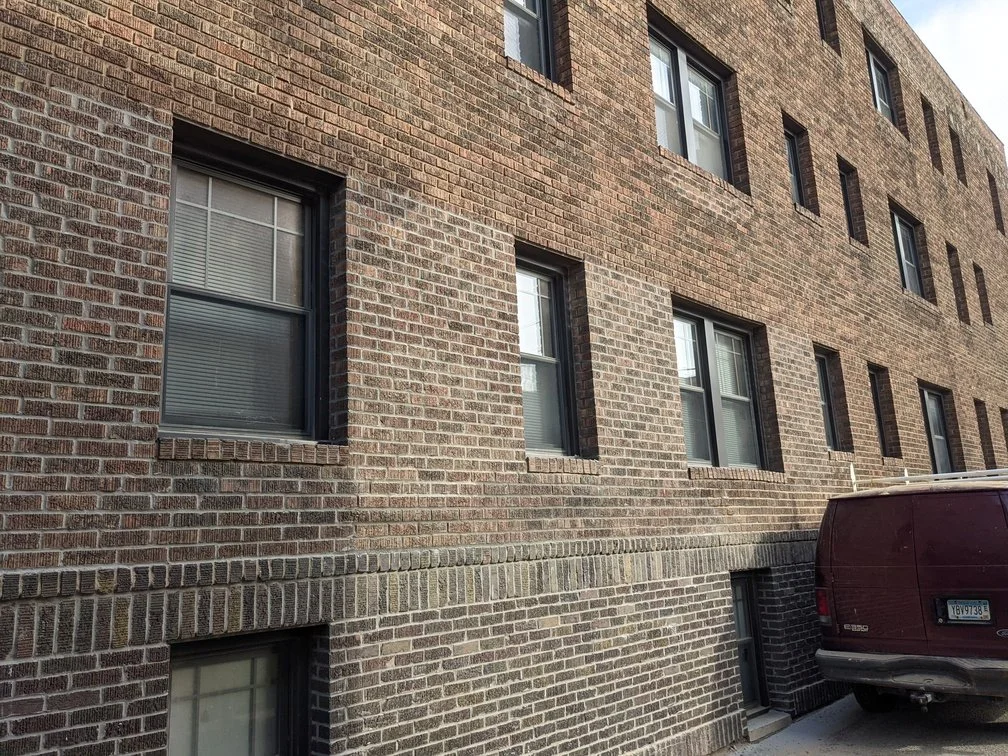
Masonry Only at the Fixture
Cracked and spalled units around an outside faucet, a vent hood, a meter pipe or an air-conditioning line, cut out and replaced
Units split when the original hole or a later one was drilled, replaced where the crack has gone through
Replacement brick shaped where needed to sit close around the pipe, duct or line
Bricks split by bracket anchors set too near their edges, replaced
For the fixture's own trade: taking it off, refitting it and sealing its edge, whether that is a plumber, the gas utility or the heating and cooling installer
Not offered: filling joints with caulk between bricks
Our Line, the Fixture Trade's Bill
A ring of damaged brick around one fixture is a few-faces job:
Taking a fixture off and refitting it is quoted by the trade that does it, and that charge is not included in our estimate.
Before you call
Every figure on this page depends on square footage and on what we find when we look. They are rough guides to help you decide whether to call, not quotes. The exact number comes after the visit, and the visit is free.
Who Handles Each Step
Sam at the estimate
He looks at how far the damage extends around the fixture and whether the units can be cut out while leaving it in place. A faucet pipe can sometimes be worked around, while a vent hood or a meter bracket may have to come off. Sam tells you which, and which trade would take it off.
The fixture's own trade
Where a fixture must come off, you book its trade: a plumber for a faucet, the gas utility for meter piping, an installer for a vent or a line set. We do not disconnect gas, water or refrigerant lines, and we do not arrange that work for you.
Our part at the wall
We cut the damaged units out and lay replacements on fresh mortar, leaving an opening for the line to pass back through. Exterior mortar work is scheduled for weather mild enough for it to cure.
The fixture back on
The trade that took the fixture off puts it back and seals its edge. Ask Sam at the estimate how long the new mortar needs before the fixture goes back on.
A Dripping Faucet Over Brick
Do I need a plumber first?+
Only if the faucet leaks or must be removed for the work. A leak should be fixed before new brick goes in below it, and whether the faucet can stay where it is during the repair is settled at the estimate.
Can you move the vent while the brick is out?+
No. A vent is moved by the installer. Our part is replacing the damaged brick around the vent where it sits.
Why is only the brick under the faucet damaged?+
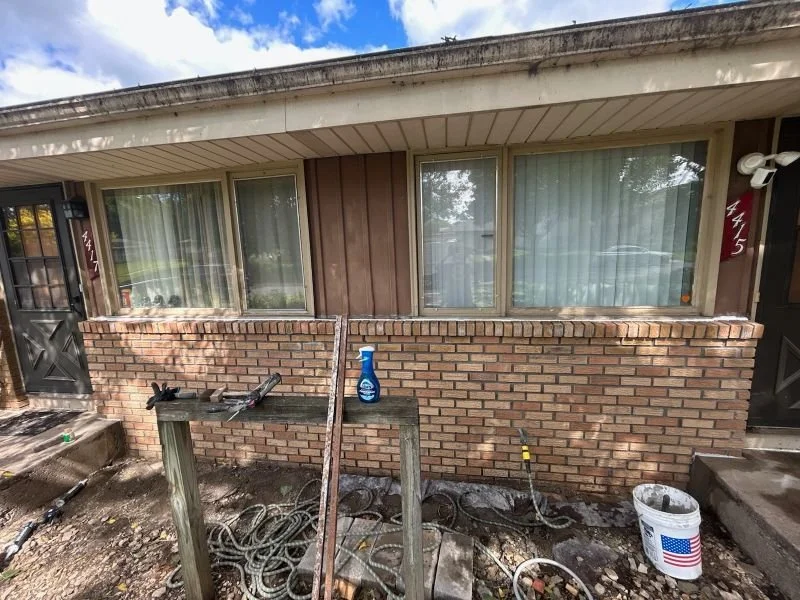
Because a spout splashes as well as drips, and all of it runs down the units directly below. Those stay wet longer than bricks a short way to either side, and bricks that freeze while they are wet are the bricks most likely to lose their face.
What Customers Say
What appears below is our live Google feed, not testimonials we picked out, so it shows whatever is genuinely on it.
Your Fixture by Name
What helps on the first call:
- Tell us which fixture the damaged brick surrounds, whether it is a faucet, a dryer or fan vent, a gas pipe, or an air-conditioning line, and whether it leaks or has been replaced since the house was built.