
Why Do Bricks Crack and Flake Off in Winter?
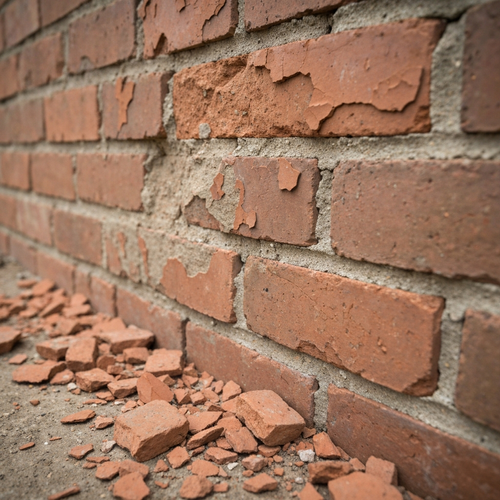
Quick Answer: Bricks crack and flake off in winter mainly because of the freeze-thaw cycle acting on moisture inside the brick. Brick is porous and absorbs water; when that water freezes, it expands, and the pressure breaks the brick apart from the inside, causing the face to crack, flake, and crumble — a process called spalling. Repeated freezing and thawing through a cold winter does this over and over. Things that make it worse include damaged or missing sealant, failing mortar joints that let in water, poor drainage, and using the wrong type of brick for the climate. Catching and addressing spalling early matters, because once a brick's protective face is gone, it deteriorates faster.
If you've noticed the faces of your bricks cracking, flaking, or crumbling away after a hard winter, you're seeing a common and damaging process. It isn't random wear — it's the predictable result of water and cold working together on porous masonry. Understanding why it happens explains both how to slow it and why it shouldn't be ignored.
Brick Is Porous, and That's the Key
The starting point is that brick is a porous material. It naturally absorbs and holds water, soaking up moisture from rain, snow, and humidity like a sponge, just more slowly. Under normal conditions, this water moves in and out of the brick without much harm. The trouble begins when that absorbed water is subjected to freezing temperatures, which is exactly what winter delivers. So the vulnerability is built into the material — brick holds water, and water plus freezing is what causes the damage.
The Freeze-Thaw Cycle
The core mechanism is the freeze-thaw cycle. When water inside the brick freezes, it expands — water grows in volume as it turns to ice. That expansion creates pressure inside the brick's pores, pushing outward against the surrounding material. Brick can only withstand so much of this internal pressure before it starts to break apart. When the ice melts, the water is reabsorbed, and the next freeze repeats the cycle. Over a winter with many freezes and thaws, repeated expansion and contraction gradually fracture the brick from the inside.
Spalling: The Visible Result
The visible damage from freeze-thaw is called spalling. As the internal pressure breaks down the brick, its surface begins to crack, flake, peel, and crumble — the face of the brick literally comes off in pieces. You'll see flaking faces, chips on the ground at the base of the wall, pitted surfaces, and bricks that look like they're disintegrating. Spalling is the signature sign of freeze-thaw damage, and once it starts, the exposed inner brick (which is even more absorbent and less protected than the fired outer face) tends to deteriorate faster.
| What you see | What's happening |
|---|---|
| Brick faces flaking or peeling | Spalling from freeze-thaw |
| Chips and crumbs at the wall base | Brick surface breaking off |
| Pitted, crumbling brick | Internal pressure fracturing it |
| Cracks in brick or mortar | Water entry and freeze damage |
| White powder (efflorescence) | Moisture moving through the masonry |
What Makes It Worse
Several factors accelerate winter brick damage, and most come down to letting in more water. Damaged or missing sealant leaves the brick more exposed to moisture absorption. Failing or cracked mortar joints are a major culprit because they let water penetrate behind and into the masonry, where it freezes and does damage. Poor drainage — water pooling against the wall, or runoff from a damaged gutter soaking the brick — increases the moisture load. And using a brick that isn't rated for a freezing climate, or that's already low-quality, makes it more prone to spalling. The common thread is moisture: anything that puts more water into the brick speeds up the freeze-thaw damage.
Why It Shouldn't Be Ignored
Spalling is progressive, which is why catching it early matters. Once a brick's hard outer face has flaked away, the softer, more porous interior is exposed, absorbs even more water, and deteriorates faster — so the damage tends to accelerate. Left unchecked, spalling can weaken the masonry, spread to more bricks, and eventually compromise the wall's integrity and appearance. Addressing it involves both repairing the damage and tackling the moisture source, whether that's failing mortar joints, missing sealant, or drainage. Because the right approach depends on the cause and extent, and because masonry repair is specialized work, having spalling assessed early keeps a manageable problem from becoming a major one.
After winter, walk your brick walls and look for flaking faces, chips at the base, and any cracked or crumbling mortar joints. Catching spalling and failing mortar early — before another freeze-thaw season — lets you address the moisture getting in before more bricks are damaged.
Frequently Asked Questions
Because of the freeze-thaw cycle acting on the moisture inside the porous brick. Brick absorbs water, and when that water freezes, it expands, creating pressure that breaks the brick apart from the inside. The result is the surface cracking, flaking, and crumbling — called spalling. Repeated freezing and thawing through winter does this damage progressively.
Spalling is the cracking, flaking, peeling, and crumbling of a brick's surface, typically caused by the freeze-thaw cycle. As water inside the brick freezes and expands, the internal pressure breaks the material down, so the face comes off in pieces. It's the signature sign of freeze-thaw damage, leaving flaking faces, chips, and pitted, crumbling brick.
Yes — water is central to it. Brick is porous and absorbs water; when that absorbed water freezes, it expands, creating pressure that fractures the brick. So winter brick damage is really water damage triggered by freezing. Anything that increases water in the brick, such as failing mortar, missing sealant, or poor drainage, worsens freeze-thaw damage.
Damaged masonry can be addressed, but it involves both repairing or replacing the affected brick and dealing with the moisture source — failing mortar joints, missing sealant, or drainage issues. Because the right approach depends on the cause and extent of the damage, and masonry repair is specialized work, it's best assessed by a professional. Addressing it early keeps the problem from spreading.
Because spalling is progressive. Once a brick's hard outer face flakes off, the softer, more porous interior is exposed and absorbs even more water, so it deteriorates faster with each freeze-thaw season. The underlying moisture source — like cracked mortar letting water in — also keeps feeding the problem until it's addressed. That's why the damage tends to accelerate year over year.
The key is managing moisture. Keeping mortar joints in good repair, maintaining appropriate sealants, ensuring good drainage so water doesn't pool against or soak the wall, and using climate-appropriate brick all reduce the amount of water that gets into the masonry. Since freeze-thaw damage depends on absorbed water freezing, limiting moisture is the main defense. A mason can advise on the right protection for your wall.
Stop the Water, Slow the Damage
Bricks crack and flake in winter because they absorb water that then freezes and expands, fracturing the brick from the inside in a process called spalling. Failing mortar, missing sealant, and poor drainage all feed it by letting in more moisture. Because spalling accelerates once a brick's face is gone, catching it early and addressing the moisture source is key to protecting your masonry. A professional assessment turns a worsening problem into a manageable repair. The earlier that happens in the life of the damage, the less of the wall is affected and the simpler the fix tends to be. A few spalled bricks caught after one winter is a small repair; a whole wall left to flake through several freeze-thaw seasons is a far bigger one, which is why a yearly look at your masonry pays off so well in a cold climate.
Seeing brick flaking or crumbling after winter? — Get the spalling and its moisture source assessed before it spreads. Golden Stones Masonry serves St. Paul and the Twin Cities. Call (612) 509-0718.
