
White Powder on Your Brick Walls? What Efflorescence Means
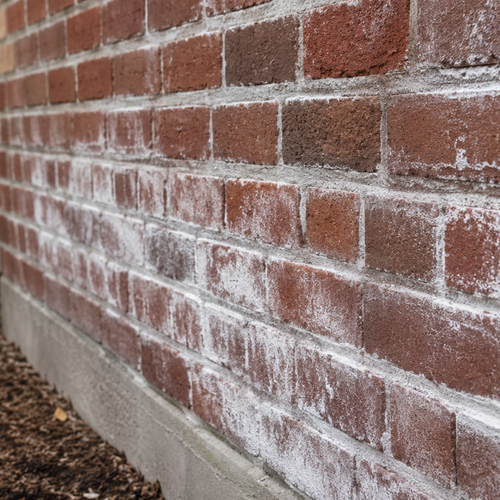
Quick Answer: That chalky white film on brick is efflorescence — natural salts that were inside the brick or mortar, dissolved by moisture, carried to the surface, and left behind as a powder when the water evaporated. It needs three things at once: soluble salts, moisture, and a path to the surface. It's usually cosmetic, not structural, but it's a sign water is moving through the masonry. Fresh deposits often brush off dry; stubborn ones need washing or a masonry cleaner — and the lasting fix is controlling the water.
You notice it after a wet stretch or on a new wall: a hazy white bloom spreading across the brick like dried salt. It looks like the brick is breaking down, but efflorescence is usually a water story, not a damage story. The white isn't the brick failing — it's mineral salts that water carried out and left on the surface. Understanding how that happens tells you both how to clean it and how to keep it from coming back.
What the White Powder Actually Is
Efflorescence is a deposit of water-soluble salts that were already present inside the masonry — in the brick, the mortar, or the materials behind the wall. On their own, those salts sit harmlessly in the material. The problem starts when water gets involved.
For efflorescence to appear, three things have to come together at the same time: there have to be soluble salts in the masonry, there has to be moisture to dissolve them, and there has to be a path for that salty water to travel to the surface. Remove any one of the three, and you don't get the white bloom. That's the whole mechanism, and it's why efflorescence is really a symptom of moisture moving through the wall.
How It Forms, Step by Step
The sequence is simple once you see it. Water — from rain, sprinklers, groundwater, or moisture trapped during construction — soaks into the masonry and dissolves the salts inside. That salty water then migrates toward the surface as the wall dries. When it reaches the face of the brick, and the water evaporates into the air, the salts are left behind as the white, powdery crust you see. The water leaves; the salt stays.
This is why efflorescence shows up most after wet weather and during damp seasons, and why it's so common on new masonry — fresh brick and mortar carry extra moisture and salts from construction, and the first drying cycles push them to the surface. That early "new building bloom" often fades on its own over the first year as the excess works its way out.
Is It a Problem?
Most of the time, efflorescence itself is cosmetic — it's a surface stain, not structural damage, and it doesn't weaken the brick. The real message is about water. Because efflorescence only appears where moisture is moving through the masonry, a wall that keeps blooming is telling you water is getting in and traveling through it. That underlying moisture, left unaddressed, is what can eventually cause real trouble: spalling brick, mortar deterioration, and freeze-thaw damage in a cold climate. In the Twin Cities, where masonry goes through hard winters and repeated freeze-thaw cycles, persistent moisture in a wall is worth taking seriously even when the white powder itself looks minor.
There's also a less common, more stubborn cousin sometimes called "calcium carbonate" deposits or hard efflorescence, which forms a tougher crust that ordinary brushing won't remove. That kind usually needs a proper masonry cleaner and points more strongly to a steady water source.
How to Remove It
| Method | Best for | Notes |
|---|---|---|
| Dry brushing | Fresh, light, powdery deposits | Use a stiff brush; do it on a dry day |
| Water rinse and scrub | Moderate deposits | Rinse well so dissolved salt doesn't soak back in |
| Masonry/acidic cleaner | Stubborn or hardened deposits | Follow product directions; pre-wet the wall first |
Start with the gentlest method that works. Light, fresh efflorescence often comes off with a stiff dry brush — and dry brushing is best because adding water can redissolve the salts and carry them right back into the brick. For more than that, washing the wall and scrubbing can work, but rinse thoroughly so the salty water runs off rather than soaking back in to bloom again later. Hardened or persistent deposits usually call for a specialty masonry cleaner, often a mild acidic product; these need to be used carefully, with the wall pre-wetted, and the directions followed exactly, because the wrong concentration can etch or discolor the brick. When in doubt, that's the point to bring in a mason rather than experiment on the wall.
How to Stop It from Coming Back
Cleaning treats the symptom. Because efflorescence requires moisture to form, the lasting fix is to cut off the water. That means keeping water away from and out of the masonry: directing downspouts and grading so rain drains away from the wall, fixing gutters that dump water down the brick, adjusting sprinklers that spray the wall, sealing cracks where water sneaks in, and making sure flashing and caps are shedding water properly. On walls that take a lot of weather, a breathable masonry water repellent can help keep liquid water out while still letting the wall dry — but the masonry should be clean and dry first, and the product should be one made for brick so you don't trap moisture inside. Solve the water, and the white powder simply stops appearing, because you've removed the one ingredient it can't form without.
Frequently Asked Questions
The white powder itself is usually cosmetic and doesn't damage the brick. What matters is the cause: efflorescence only appears where water is moving through the masonry, so a wall that keeps blooming is signaling a moisture problem. Left alone, that ongoing moisture can lead to real damage over time — spalling, mortar breakdown, and freeze-thaw cracking — so it's worth tracing the water.
Sometimes. On new masonry, the early bloom often fades over the first year as construction moisture and excess salts work their way out. But if it keeps returning after that, it won't simply stop — it means water is still getting into the wall. Recurring efflorescence is a sign to find and fix the moisture source rather than wait it out.
Start gentle. Light, fresh deposits usually brush off with a stiff dry brush, and dry is better because water can redissolve the salts back into the brick. For heavier deposits, wash and scrub, rinsing well so the salty water runs off. Stubborn or hardened crusts need a masonry cleaner used carefully per its directions — or a mason's help if you're unsure.
Because the water source hasn't been addressed. Efflorescence forms only when moisture dissolves salts and carries them to the surface, so as long as water keeps entering the masonry, the bloom keeps returning, no matter how often you clean it. Common culprits are poor drainage, misdirected downspouts, sprinklers hitting the wall, and cracks or failed flashing letting water in.
You can, but only after fixing the moisture and cleaning and drying the wall first. A breathable masonry water repellent made for brick can help keep liquid water out while still letting the wall dry. Avoid non-breathable coatings, which can trap moisture inside and make things worse. Sealing is a supporting step — controlling drainage and water intrusion is the real fix.
The Powder Is a Water Message
Efflorescence looks alarming, but it's mostly the wall talking: salts riding moisture to the surface and getting left behind. Clean the deposits with the gentlest method that works, but treat the white bloom as a signal to find where water is getting into the masonry. Fix the drainage and the leaks, and you remove the one ingredient efflorescence can't do without — which is how you stop it for good, not just until the next rain.
White powder keeps coming back on your brick? — Get the masonry cleaned and the moisture source found and corrected. Golden Stones Masonry serves St. Paul and the Twin Cities. Call (612) 509-0718.
