
Tuckpointing vs Repointing: The Difference and Which You Need
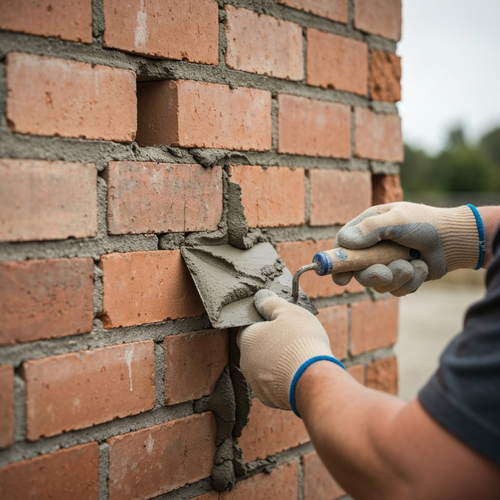
Quick Answer: Repointing is the real repair — cutting out crumbling mortar and packing the joints with fresh mortar to restore the wall's weather seal. Tuckpointing, in the strict sense, is a decorative finish that uses two mortar colors to fake crisp, thin joints; in everyday use most people say "tuckpointing" when they mean repointing. If your joints are cracking, receding, or letting water in, what you need is repointing — and getting the mortar right matters more than the name.
You're running a finger along the brick by the front steps, and it comes back gritty, with a little pile of sand at your feet where the joint used to be. Maybe there's a hairline gap you can slip a coin into, or a chalky white bloom creeping across the wall. Two contractors come out, and one says "repointing," the other says "tuckpointing," and now you're not sure whether they quoted the same job. They probably did — but the words actually mean different things, and the difference is worth understanding before you hand over a check.
Repointing: The Repair That Keeps Water Out
Mortar joints are the weak point of any brick wall by design. The brick is hard and durable; the mortar is softer and meant to take the wear, which is why the joint is the wall's first line of defense against water. Over decades, mortar erodes, cracks, and falls out, and repointing is the fix: a mason grinds or chisels the deteriorated mortar out of the joints to a sound depth, then packs in fresh mortar and smooths it. Done right, it restores the seal that keeps rain out of the wall.
The trigger for repointing is almost always visible deterioration — disintegrating mortar, cracks in the joints, loose bricks, or damp appearing on an interior wall. The National Park Service, whose preservation guidance is the standard masons work from, even names the simple field test: drag a screwdriver across a joint, and if the mortar powders or scrapes away, it has failed and the joint needs repointing.
Tuckpointing: A Finish, Not a Fix
Here's where the language gets muddy. In its true, historical sense, tuckpointing isn't a repair at all — it's a decorative technique. Masons fill the joint with a mortar color-matched to the brick, then press a thin line, or "fillet," of contrasting mortar into it to create the illusion of very fine, precise joints. It was developed in 18th-century England to make ordinary brickwork mimic the look of expensive hand-rubbed brick. The Park Service is explicit that tuckpointing "is not true repointing," because the structural work of removing and replacing failed mortar isn't the point — the look is.
In everyday American usage, though, "tuckpointing" has drifted to mean the same thing as repointing, and plenty of reputable contractors use the words interchangeably. That's fine to know, but it's why you should look at what the quote actually describes rather than the label on it.
| Repointing | Tuckpointing (true sense) | |
|---|---|---|
| Purpose | Structural repair + weather seal | Decorative appearance |
| What's done | Cut out failed mortar, refill joints | Add a fine contrasting fillet line |
| When you need it | Crumbling, cracked, receding joints | Solid joints you want to look crisper |
| Stakes if skipped | Water intrusion, spalled brick | Cosmetic only |
Why This Matters So Much in a Freeze-Thaw Climate
A failed joint isn't just ugly — in the Twin Cities, it's the start of real damage, because of what water does when it freezes. Water seeps into the gaps and pores of failing mortar and brick, and when it freezes, it expands about 9 percent. That expansion exerts pressure greater than the masonry can bear, and something cracks. Each thaw lets more water in, the next freeze pushes harder, and the damage builds on itself.
The cruel part is that a climate like ours, which freezes and thaws over and over through winter and the shoulder seasons, is harder on masonry than a place that simply stays frozen all winter. Every cycle is another round of pressure. You see the result as spalling — the brick's face flaking off, exposing the softer, more porous brick underneath, which then fails even faster. Repointing failing joints before water gets a foothold is what stops that chain reaction, which is why timely mortar joint repair matters more here than in a mild climate.
The Detail That Separates a Good Job From a Costly One
If there's one thing to take away, it's this: the new mortar must be softer than the brick, and no harder than the old mortar around it. It's a common and expensive error to assume harder, higher-strength mortar is better. It isn't. Brick expands, contracts, and flexes slightly with temperature and moisture; soft mortar gives with that movement, while a hard Portland-cement mortar doesn't. Pack a too-hard mortar into an old soft-brick wall and the stress and trapped moisture transfer into the brick itself — until the face literally pops off. The Park Service documents exactly this failure, where rigid modern mortar caused the surface to spall off the surrounding brick.
Mortar is meant to be sacrificial. Repointing a joint is cheap; replacing a wall of spalled brick is not. Good masons also match the sand first — it's the largest ingredient by volume and drives the color and texture — and they fix the root cause, like a leaking gutter or downspout, before repointing, since otherwise the water just attacks the fresh work. The joints are typically cut to a depth of about two to two and a half times their width, roughly half an inch to an inch on most brick, and the final cutting is done by hand on delicate joints because a careless power tool can chew into the brick.
How Long It Lasts and When to Act
Done correctly, repointing is meant to last — at least 30 years, and a well-matched job can last 50 to 100 years. Mortar joints generally start showing wear around the 20- to 30-year mark, so a brick home that's a few decades past its last work is worth a look. The sooner failing joints are addressed, the smaller the job: catch it at the mortar stage and you're repointing; wait until water has spalled the brick or worked into a chimney, and now you're replacing brick or rebuilding, which costs far more.
So which do you actually need? If your joints are cracking, gapping, crumbling, or letting in water, that's repointing — the repair. If the brick and joints are solid and you simply want a cleaner, finer look, that's where true tuckpointing comes in. Sometimes a home gets both: the wall is repointed to make it sound, then finished for appearance. The honest answer comes from looking at the joints, not the brochure.
Frequently Asked Questions
Not technically, though the words are often used interchangeably. Repointing is the structural repair — removing failed mortar and refilling the joints to seal the wall. True tuckpointing is a decorative finish that uses two mortar colors to mimic fine joints. Most homeowners who say "tuckpointing" actually need repointing, so focus on what the work involves rather than the term.
Look for mortar you can scrape out with a screwdriver, joints that are cracked or receding, gaps wide enough for a coin, loose bricks, white efflorescence, or damp on the inside of an exterior wall. Any of these means the joints have failed, and water is getting in. The screwdriver test is the quickest check: if the mortar powders away, it's time.
Because mortar that's harder than the brick causes damage. Brick flexes slightly with temperature and moisture, and soft mortar moves with it; hard, high-strength mortar doesn't, so the stress and trapped water shift into the brick and can spall its face off. The mortar should be softer than the brick and no harder than the original — strength is not the same as suitability.
Mortar joints typically last 20 to 30 years before they fail, though this varies with exposure and the original work. A quality repointing job is meant to last at least 30 years and often much longer. Brick homes a few decades past their last repointing are worth inspecting, especially after years of freeze-thaw winters.
Water enters the wall through open joints, and in a freeze-thaw climate, it freezes, expands, and cracks the masonry from the inside. Over time, that spalls the brick faces and can undermine a chimney or wall, turning a relatively inexpensive repointing job into brick replacement or a rebuild. Failing joints don't stay the same size — they get worse with every wet-then-freezing season.
Fresh mortar needs to cure above freezing, so cold Minnesota winters aren't ideal for the work. Masons generally schedule repointing for the warmer months or use temporary heat and protection for urgent repairs. If you spot failing joints in winter, it's worth getting on the schedule early so the work happens before another freeze-thaw season does more damage.
Get the Repair Right, Whatever You Call It
The label matters less than the work: repointing seals a wall by replacing failed mortar, and true tuckpointing dresses up a sound one. In a climate that freezes and thaws all winter, the repair is the urgent one, because open joints let water in to do its slow, expanding damage. Match the mortar to the brick, fix what's letting water in, and act while it's still a joint problem — and your brick can outlast all of us. Wait, and the wall starts taking the damage the mortar was there to absorb.
Crumbling mortar or cracked joints on your brick or chimney? — Get an honest look at whether it's repointing you need and mortar matched to your masonry. Golden Stones Masonry serves St. Paul and the Twin Cities. Call (612) 509-0718.
