
Signs Your Mortar Joints Need Repair Before Water Gets In
Quick Answer: Mortar joints need repair when they show signs of deterioration: cracks in the mortar, mortar that's crumbling or turning to powder you can scrape out with a finger, visible gaps or holes where mortar has fallen out, mortar that's noticeably recessed or worn back from the brick face, and loose or shifting bricks. White powdery efflorescence and recurring dampness inside can also point to failing joints letting water in. Mortar is the weakest, most exposed part of a brick wall and wears out faster than the brick, so it needs periodic repair through tuckpointing or repointing. Catching failing mortar early matters because it's the main path for water to enter and damage the masonry.
Mortar is the glue holding a brick wall together, but it's also the part that wears out first. Because it's softer and more exposed than the brick, mortar deteriorates over time, and when it does, it stops doing two critical jobs: holding the wall together and keeping water out. Knowing the signs that your mortar joints need repair lets you address them before water turns a maintenance issue into structural damage.
Why Mortar Fails First
In a brick wall, the mortar joints are intentionally the sacrificial element — softer than the brick so that the joints, rather than the more expensive and harder-to-replace bricks, take the wear. Mortar is also the most exposed part of the wall surface, bearing the brunt of rain, freeze-thaw cycles, and time. As a result, mortar naturally deteriorates faster than brick and needs periodic repair over the life of a wall. This is normal and expected; the key is recognizing when that point has arrived so you can repair the joints before water gets behind them.
Sign One: Cracked or Crumbling Mortar
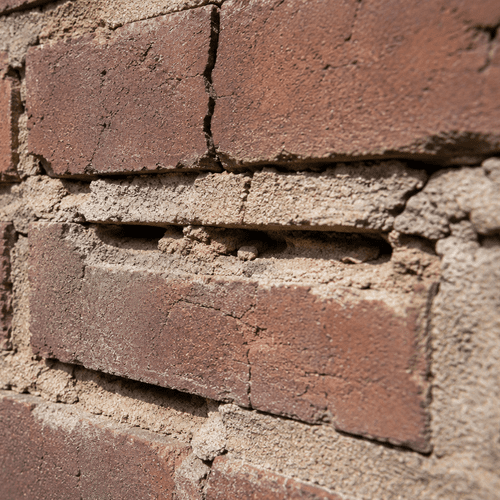
The most direct sign is mortar that's visibly cracked, crumbling, or turning to powder. If you can scrape mortar out of a joint with a screwdriver or even a finger, or if it falls away as loose, sandy material, it has deteriorated and lost its integrity. Cracks running through the mortar joints are another clear indicator. Crumbling, powdery mortar no longer seals or bonds as it should, which means it's both weakening the wall and creating a path for moisture.
Sign Two: Gaps, Holes, and Recessed Joints
As mortar deteriorates further, it falls out, leaving visible gaps, holes, or voids in the joints. You may also notice the mortar has worn back so it's recessed well below the face of the brick, where healthy joints would be closer to flush or properly tooled. These openings and recesses are direct routes for water to penetrate into and behind the wall, where it can freeze, expand, and cause further damage. Missing and deeply recessed mortar is a strong sign that repair is needed.
| Sign | What it indicates |
|---|---|
| Cracked or powdery mortar | Mortar deteriorating, losing integrity |
| Mortar scrapes out easily | Joints have failed |
| Gaps or holes in joints | Mortar missing; water entry path |
| Mortar recessed from brick face | Worn-back joints needing repair |
| Loose or shifting bricks | Mortar no longer holding the wall |
| Efflorescence or interior damp | Water getting through the joints |
Sign Three: Loose Bricks and Water Signs
When mortar deterioration is advanced, the bricks themselves can become loose or start to shift, because the mortar is no longer holding them firmly in place. Loose or moving bricks are a serious sign that the joints have failed enough to affect the wall's stability. Water-related signs point in the same direction: white powdery efflorescence on the brick surface indicates moisture moving through the masonry, and recurring dampness or moisture inside can mean water is getting in through failing joints. These signs connect the mortar's condition to the moisture problems it causes.
Why It Matters and How It's Fixed
Failing mortar is more than cosmetic, because it's the main way water enters a brick wall. Once water gets in through deteriorated joints, it can freeze and expand, damage the brick, feed efflorescence and dampness, and progressively weaken the structure. So repairing mortar early protects the whole wall. The repair is done through tuckpointing or repointing — grinding or raking out the old, deteriorated mortar and packing in fresh mortar to restore the joints. This renews the seal and the structural bond, stopping water entry and stabilizing the wall. Because matching the mortar and doing the work correctly matters for both appearance and performance, mortar repair is specialized masonry work best handled by a professional.
Test your mortar joints with a key or screwdriver. Lightly scrape along a few joints — if the mortar is solid, it resists; if it crumbles, flakes, or scrapes out easily, the joints are deteriorating and due for repair. Doing this around the wall shows you how widespread the problem is.
Frequently Asked Questions
Look for cracked, crumbling, or powdery mortar you can scrape out easily, visible gaps or holes where mortar has fallen out, mortar that's recessed well below the brick face, and loose or shifting bricks. Efflorescence and recurring interior dampness can also signal failing joints letting water in. These signs mean the mortar has deteriorated and needs repair.
Because mortar is intentionally softer than brick — it's the sacrificial part of the wall, designed to take the wear so the harder, costlier bricks don't. It's also the most exposed part of the surface, bearing the brunt of rain, freeze-thaw, and time. As a result, mortar naturally wears out faster than brick and needs periodic repair over a wall's life.
It's the repair process for deteriorated mortar joints: grinding or raking out the old, failed mortar and packing in fresh mortar to restore the joints. This renews both the weather seal and the structural bond between bricks, stopping water entry and stabilizing the wall. The terms are often used interchangeably for this masonry repair, which is best done by a professional.
Yes — failing mortar is the main path for water to enter a brick wall. Cracks, gaps, and recessed joints let water penetrate behind the masonry, where it can freeze and expand, damage the brick, and cause efflorescence and interior dampness. This is why repairing deteriorated mortar early is important: it stops the water entry that drives further damage.
Often, yes. When mortar deteriorates enough, it no longer holds the bricks firmly, so they can become loose or start to shift. Loose or moving bricks are a serious sign that the joints have failed to the point of affecting the wall's stability. This warrants prompt attention, since it indicates that the mortar repair is needed to re-secure the masonry.
It varies with the wall's age, exposure, climate, and the original mortar, so there's no single interval — the right time is when the signs of deterioration appear. Because mortar wears faster than brick, periodic repair is expected over a wall's life. Inspecting the joints for cracking, crumbling, and gaps tells you when repair is due, rather than a fixed schedule. A good habit is to check the joints each year, especially on the walls that take the most weather — the sides facing prevailing rain and the areas near the ground. Those spots tend to deteriorate first, so they give you the earliest warning that the rest of the wall may not be far behind, so you can plan repairs before the damage spreads widely.
Repair the Joints Before the Water Wins
Mortar is the part of a brick wall that wears out first, and the signs it needs repair — cracked and crumbling mortar, gaps and recessed joints, loose bricks, and water signs like efflorescence — are your cue to act. Because failing mortar is the main route for water into the wall, repairing it through tuckpointing protects the whole structure. Catch the signs early, and a routine repointing keeps your masonry sound and watertight.
Mortar joints cracking, crumbling, or letting water in? — Get them assessed and restored with proper tuckpointing. Golden Stones Masonry serves St. Paul and the Twin Cities. Call (612) 509-0718.
