
Difference Between Chimney Caps and Crowns (St. Paul Perspective)
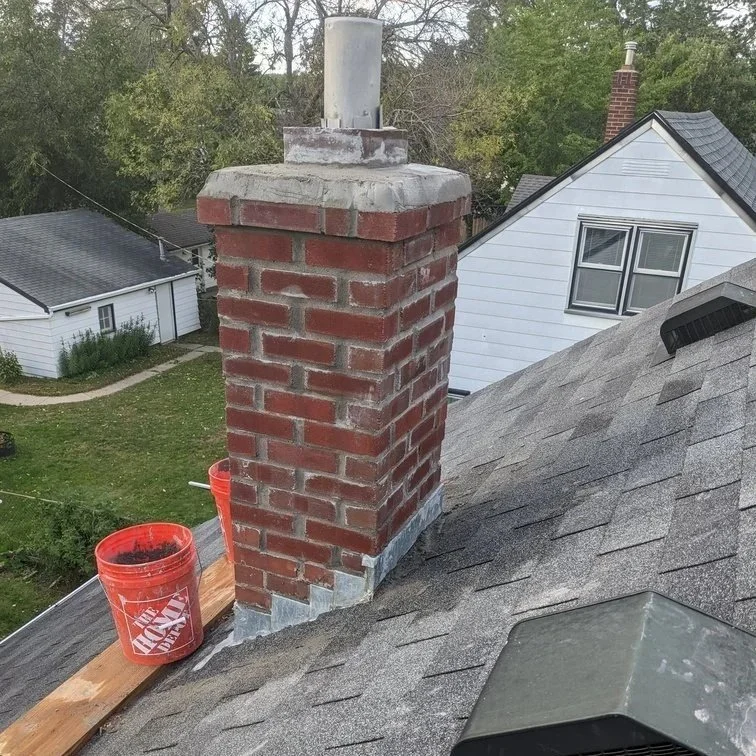
Chimney top in St. Paul showing metal cap and masonry crown protecting flue from water, animals, and harsh winter weather.
Introduction: Why Chimney Caps and Crowns Matter in St. Paul
In St. Paul, fireplaces and wood-burning stoves are more than decorative features. Long winters and cold stretches make chimneys an active, essential part of many homes. Because of that, the chimney needs to function as a complete system, not just a vertical stack of brick. That system includes the flue, liner, masonry, flashing, chimney cap, and chimney crown. When even one of those components is neglected, problems tend to spread quickly.
Two of the most important, and most misunderstood, parts of that system are the chimney cap and the chimney crown. Both sit at the top of the chimney, both deal with water, and both are exposed to the worst weather St. Paul can throw at them. When they fail, homeowners may notice leaks, crumbling brick, draft problems, animal intrusion, or safety risks such as carbon monoxide leaks. Understanding what each one does and how they differ is one of the simplest ways to protect a home and avoid expensive repairs.
Many homeowners use the terms chimney cap and chimney crown interchangeably, even though they are completely different components. That confusion often leads to the wrong fixes being made. A homeowner may replace a cap and still have leaks because the crown is cracked, or repair the crown while animals continue to enter through an uncapped flue. This guide clearly breaks down the differences, using examples and conditions specific to St. Paul’s climate, so homeowners can identify what they have, understand what they need, and talk confidently with chimney professionals.
St. Paul’s weather makes this distinction even more important. Heavy snowfall, frequent freeze-thaw cycles, strong winds, driving rain, and wide temperature swings are tough on both masonry and metal. Ice can crack poorly built crowns, while wind-driven rain can pour straight into an uncapped flue. This article explains how caps and crowns respond differently to those conditions and why both matter.
What Is a Chimney Cap?
A chimney cap is the covering that sits directly over the flue opening at the very top of the chimney. It is usually made of metal and often includes mesh sides and a solid top. Its main job is to protect the flue opening while still allowing smoke and combustion gases to exit safely.
Chimney caps serve several essential functions. They keep rain and snow from falling directly into the flue, block animals like birds, squirrels, and raccoons from nesting inside, prevent leaves and debris from clogging the chimney, reduce downdrafts caused by wind, and help contain sparks and embers. Because a cap attaches to the flue rather than the entire chimney, it is typically easier to replace or upgrade than masonry components.
Most caps share similar design features. They have mesh panels around the sides, a hood or lid that sheds water, and mounting hardware that secures the cap to the flue tile. Some are designed for a single flue, while others cover multiple flues at once. Wind-resistant caps include shapes or baffles that reduce smoke blowback on windy days, which can be especially helpful in St. Paul neighborhoods exposed to open terrain or river winds.
Caps are made from several materials. Galvanized steel is common and affordable, but it can rust relatively quickly in a northern climate. Stainless steel is more corrosion-resistant and generally lasts much longer in wet, freezing conditions, making it a popular choice for St. Paul homes. Copper caps offer excellent durability and a distinctive appearance, but come at a higher cost and are often chosen for historic or high-end properties.
Chimney caps are used on more than just wood-burning fireplaces. Gas fireplaces, wood stoves, and some furnace or boiler vents also require properly designed caps. Older St. Paul homes often have multiple flues exiting a single chimney stack, some active and some abandoned. In these cases, a multi-flue cap may be used to protect all openings under one larger hood.
For St. Paul homeowners, chimney caps provide specific benefits. They keep snow and freezing rain out of the flue, reduce cold air downdrafts that make rooms feel drafty, and prevent animals from entering during spring and fall nesting seasons. With many mature trees in local neighborhoods, caps also help keep leaves and twigs out of the chimney, reducing blockages and fire risks.
What Is a Chimney Crown?
A chimney crown is the concrete or masonry slab that covers the entire top of a masonry chimney, surrounding the flue tiles. It is not the same as a cap. Instead of covering the flue opening, crown seals protect the chimney structure from water intrusion.
The crown’s main purpose is to shed water away from the flue tiles and off the sides of the chimney. A properly built crown has a slight slope and an overhang that directs water away from the brick or stone below. In effect, the crown acts like a roof for the chimney stack, protecting the masonry from saturation.
A well-constructed crown is usually made from poured concrete, not basic mortar. It should be thick enough to resist cracking, sloped to prevent standing water, and extended slightly beyond the chimney walls to form a drip edge. Small expansion gaps around flue tiles allow movement without cracking. Unfortunately, many older St. Paul chimneys were built with thin, flat mortar crowns that are especially vulnerable to freeze-thaw damage.
Material choice matters greatly in this climate. Mortar-only crowns are porous and absorb water easily. When that water freezes, it expands and breaks the material apart. Proper concrete crowns, polymer-modified mixes, or professional crown coatings hold up far better under repeated freezing and thawing. When crowns fail, water enters the chimney structure, leading to deteriorating mortar joints, spalling bricks, and even interior leaks.
The crown sits directly on top of the chimney masonry and interfaces with both the flue liners and the brickwork. Cracks or gaps at these joints are common entry points for water. When crowns stop doing their job, homeowners may first notice stains on ceilings or walls near the chimney, loose bricks at the top, or crumbling mortar along the upper courses.
Key Differences Between Chimney Caps and Crowns
The easiest way to understand the difference is by location. The chimney crown covers the entire top surface of the chimney structure. The chimney cap sits above the flue opening. Think of the crown as the chimney’s roof and the cap as the flue’s hat.
Their functions differ as well. The crown manages moisture in the chimney masonry, preventing water from soaking into the bricks and mortar. The cap protects the flue interior from rain, animals, debris, and downdrafts. A cap alone cannot stop water from entering through a cracked crown, and a crown alone cannot keep animals or rain out of an open flue. In St. Paul’s climate, both are necessary.
Construction and installation are also very different. Crowns are built or repaired by masons or chimney professionals using concrete or specialized materials and require careful forming and curing. Caps are manufactured products that are sized to fit flues and mechanically attached. While some homeowners may replace a basic cap themselves, crown work almost always requires professional expertise for durability and safety.
Maintenance differs as well. Crowns can last decades if built correctly, but may need periodic sealing or resurfacing to extend their life. Caps are more exposed to wind and ice and may rust, loosen, or deform, increasing the need for replacement. Cost reflects these differences. Caps are generally less expensive, while crown repair or replacement involves more labor and materials. That said, a properly built crown provides tremendous long-term value by preventing widespread chimney damage.
How St. Paul’s Climate Affects Caps and Crowns
Freeze-thaw cycles are the single biggest threat to chimney crowns in St. Paul. Water enters small cracks, freezes, expands, and widens them. Over time, hairline cracks can lead to major failures. Poorly built crowns deteriorate quickly under these conditions.
Snow and ice place stress on both caps and crowns. Heavy snow can bend thin metal caps or loosen fasteners. Ice dams and standing water on flat crowns accelerate cracking and leaks. Wind-driven rain can force moisture under poorly designed caps or into crown defects.
Temperature swings add another layer of stress. Metal caps expand and contract differently from concrete crowns, which can strain joints and sealants. UV exposure and summer heat can also degrade crown coatings, leaving them vulnerable when winter returns.
St. Paul’s housing stock adds complexity. Many older homes have aging chimneys with outdated crowns or missing caps. Historic brickwork often requires specialized repairs to maintain both performance and appearance.
Signs Your St. Paul Chimney Needs a New Cap
Rust, corrosion, bent metal, missing mesh, or loose fasteners are clear signs that a cap needs replacement. Animal noises, nesting debris, or droppings indicate an uncapped or damaged flue. Damp smells, water staining inside the firebox, or rusted dampers often point to water entering through the flue. Draft problems and smoke blowback on windy days can also signal cap issues.
Signs Your St. Paul Chimney Needs Crown Repair or Replacement
Cracks across the crown surface, flaking concrete, missing chunks, or exposed aggregate all indicate deterioration. Water stains on walls or ceilings near the chimney often result from crown failure. Loose bricks and crumbling mortar below the crown suggest long-term moisture exposure. Flat, thin, mortar-only crowns are inherently problematic in this climate, even before visible damage appears. Pooling water or plant growth on the crown surface is another red flag.
Inspection and Repair Considerations
Homeowners can perform basic ground-level checks with binoculars, noting whether both a cap and crown are present and visibly intact. Photography and zoom lenses help. Roof access should generally be left to professionals, especially in St. Paul, where surfaces are often wet or icy.
Professional inspections include roof-level evaluation of both cap and crown, checking attachment, materials, slope, cracks, and integration with the flue. Moisture meters and infrared tools may be used to detect hidden leaks.
Cap repairs typically involve replacement or upgrades to better materials or designs. Crown repairs range from sealing hairline cracks to resurfacing or full demolition and rebuild. Crown work is best scheduled for the warmer months so the materials cure properly.
Conclusion
Chimney caps and crowns serve different but equally important roles. Caps protect the flue from water, animals, debris, and downdrafts. Crowns protect the entire chimney structure from moisture intrusion. In St. Paul’s harsh climate, both are essential. Neglecting either one can lead to leaks, masonry damage, safety hazards, and costly repairs.
By understanding the difference, performing simple visual checks, and scheduling professional inspections, St. Paul homeowners can protect their chimneys and their homes. Caps and crowns are not optional extras. They are long-term protective investments that help chimneys survive winter after winter with fewer problems and greater peace of mind.
Chimney Cap & Crown FAQs in St. Paul, MN
From the ground, you can usually see a metal cap over the flue and a concrete or masonry surface beneath it. A professional inspection provides confirmation.
Minor issues may not require immediate shutdown, but missing caps or severely damaged crowns should be addressed before continued use.
Annual inspections are recommended, with additional checks after severe storms or harsh winters.
Basic cap replacement may be possible for some homeowners, but professionals are best suited to handle crown repair and any roof-level work due to safety and climate considerations.
Trust Golden Stone Masonry in St. Paul, MN, for professional chimney repair, foundation masonry repair, tuckpointing & mortar joint repair, and brick repair & restoration services. Our team works hard to restore strength and prevent moisture intrusion. Ours is a licensed and insured company offering a 10-year warranty. Get your free estimate today.
